

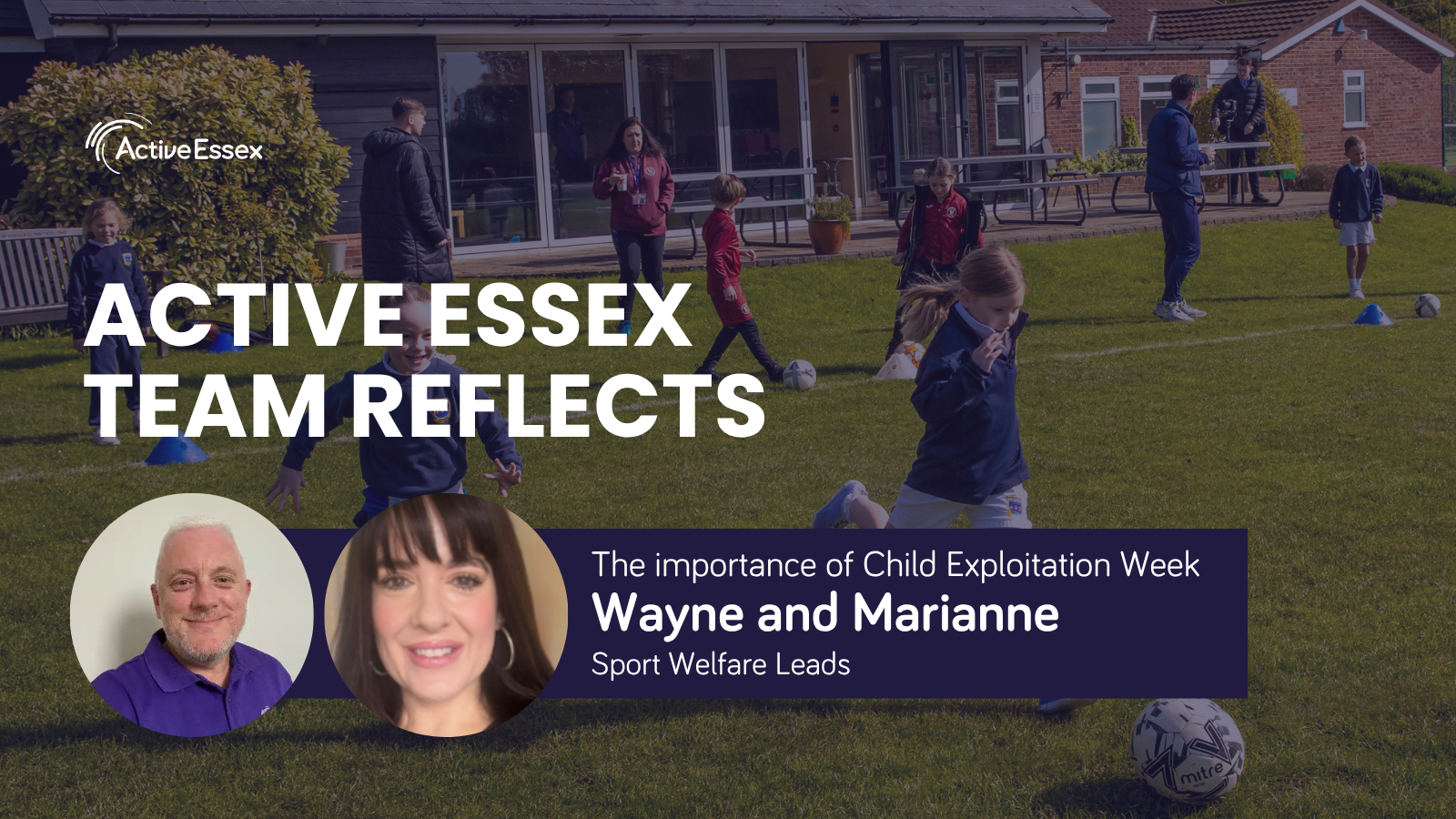
Child Exploitation Awareness Week always encourages us to pause and reflect, not just on what exploitation is, but on what we’re seeing, learning and experiencing across Essex’s sport, physical activity, leisure and Holiday Activity & Food (HAF) settings. Each year, this week reminds us how powerful these environments can be for children and young people, and how vital it is that we continue building cultures where safety, trust and curiosity sit at the heart of everyday practice.
Working across clubs, leisure centres and community programmes, we see daily how sport can transform a young person’s sense of belonging. But we also see how vulnerability can sit quietly beneath the surface. That duality and the power of sport and the responsibility it carries, is something we reflect on often.
What this week brings into focus
Over the past year, our conversations with coaches, volunteers and providers have highlighted a consistent theme: exploitation rarely begins with something obvious. It often starts with small changes such as a shift in behaviour, a new relationship, a young person becoming harder to reach.
Wayne’s experience in policing taught him how easily early signs can be missed when they appear subtle or insignificant. Marianne’s background in education showed how behaviours linked to exploitation are sometimes misunderstood as ‘acting out’ rather than ‘reaching out’. These reflections shape the way we support the sector today.
Child exploitation, whether criminal, sexual or financial, is built on manipulation, trust and gradual boundary‑breaking. That’s why awareness isn’t a one‑week activity; it’s a culture, a daily practice and a shared responsibility.
What we’re noticing across Essex
Across HAF programmes, sports clubs and leisure settings, we’ve seen how important visibility is, especially during school holidays when children may have fewer protective adults around them. For some young people, your setting may be the only consistent place where someone notices when something feels different.
We’ve also seen how those who seek to exploit young people may deliberately look for trusted environments where they can build relationships unnoticed. This reinforces why strong boundaries, open cultures and confident staff matter so much.
These reflections aren’t about creating fear, they’re about strengthening awareness and recognising the protective power of your everyday interactions.
Signs we’ve learnt to look for
There is no single sign of exploitation, but patterns or changes should always prompt professional curiosity. You might notice a young person:
- Going missing from sessions or avoiding questions about where they’ve been
- Having unexplained money or belongings
- Becoming withdrawn, anxious, aggressive or secretive
- Spending time with significantly older individuals
- Using new language or showing interest in risky behaviour
- Displaying unexplained injuries or emotional distress
In sport‑specific settings, additional indicators may include:
- Over‑attachment to a particular adult
- Favouritism or gifts outside normal boundaries
- Secretive communication
- Adults seeking unnecessary one‑to‑one time
These signs don’t confirm exploitation, but they do confirm the need to notice, record and act.
Who may be more vulnerable?
While exploitation can affect any child, we’ve seen increased vulnerability where there is:
- Instability at home
- Social isolation or low confidence
- Previous trauma, neglect or abuse
- Exclusion from education
For many young people, your setting may be one of the few stable, trusted spaces they have. That’s why your role is so significant.
What we’ve learned about taking action
One of the strongest reflections from our work is this: You don’t need to have all the answers, but you do need to act.
- Notice and record concerns, even if they feel small
- Follow your safeguarding procedures
- Report to your Welfare Officer
- Share concerns with agencies when needed
- Trust your instincts, early action protects children
We’ve seen how partnership working and information sharing strengthens safeguarding. You are not alone in this work and there is support available locally and nationally:
- Active Essex Sport Welfare Leads – advice, training and safe practice
- NSPCC Helpline (0808 800 5000) – for advice or to report concerns
- CEOP (Thinkuknow) – support and reporting for online concerns
- NWG Network – (01332 585371) [email protected] Welcome to the NWG Network
- Childline – advice for children & young people Child trafficking | Childline
- Local Safeguarding Partnerships for procedures and escalation routes in your area
Looking ahead: what this week should inspire
Child Exploitation Awareness Week is a powerful reminder, but it should also be a catalyst. Across Essex, we see a committed network of providers who care deeply about the children they support. Your willingness to notice, question and act makes a real difference.
Every interaction matters. Every question matters. Every action matters.
Reflective questions for your setting
As you think about your own environment, consider:
- Are your safeguarding practices visible and understood?
- Do staff and volunteers feel confident to recognise and act on concerns?
- Is your culture open, safe and supportive of raising concerns?
If you’d like support with any of these reflections, we’re here to help.
Together, we can ensure that sport and physical activity across Essex remain safe, positive and protective spaces, not just this week, but every day.
For more information, visit our webpage: https://www.activeessex.org/sector-support/safeguarding-hub/