
This summer has demonstrated the power of place in helping residents move more, connect with others and feel proud of where they live. Across Greater Essex, partners have worked together to activate parks, beaches, neighbourhood spaces, community facilities and active travel routes, creating opportunities for thousands of people to be physically active close to home.
This work directly contributes to Active Essex’s outcome of creating better connected and accessible places, designed to increase active travel and physical activity, helping to build environments where being active is a natural part of everyday life. The outcome is supported through three key areas of focus: activating communities, active travel, and planning and infrastructure.
Activating Communities
A key priority within our implementation plan is ensuring that green spaces, neighbourhood spaces and blue spaces provide free, inclusive opportunities that strengthen community identity, belonging and wellbeing. Across the summer, we have seen this come to life in various communities across Greater Essex.
On Canvey Island, Active Canvey-on-Thames transformed local blue spaces into vibrant community assets, offering six weeks of free activities including open water swimming sessions, cold water dips, family yoga, beach pilates, beach karate, walks and family events. Over the summer, more than 300 unique participants took part in Active Canvey programmes, demonstrating the strong demand for accessible opportunities that encourage residents to be active in and around blue spaces. The programme concluded with a community celebration that brought families together and showcased the value of accessible opportunities on residents’ doorsteps. Participants consistently reported feeling more connected to their community and appreciative of the chance to spend time outdoors and try something new.
Elsewhere, five Big Lunches took place across Thurrock and attracted more than 5,000 residents, with the final event in Blackshots welcoming an estimated 1,800 attendees. Delivered through partnership working, the events created opportunities for residents to enjoy physical activity, culture, entertainment and social connection within their local neighbourhoods, demonstrating the role community spaces play in bringing people together.
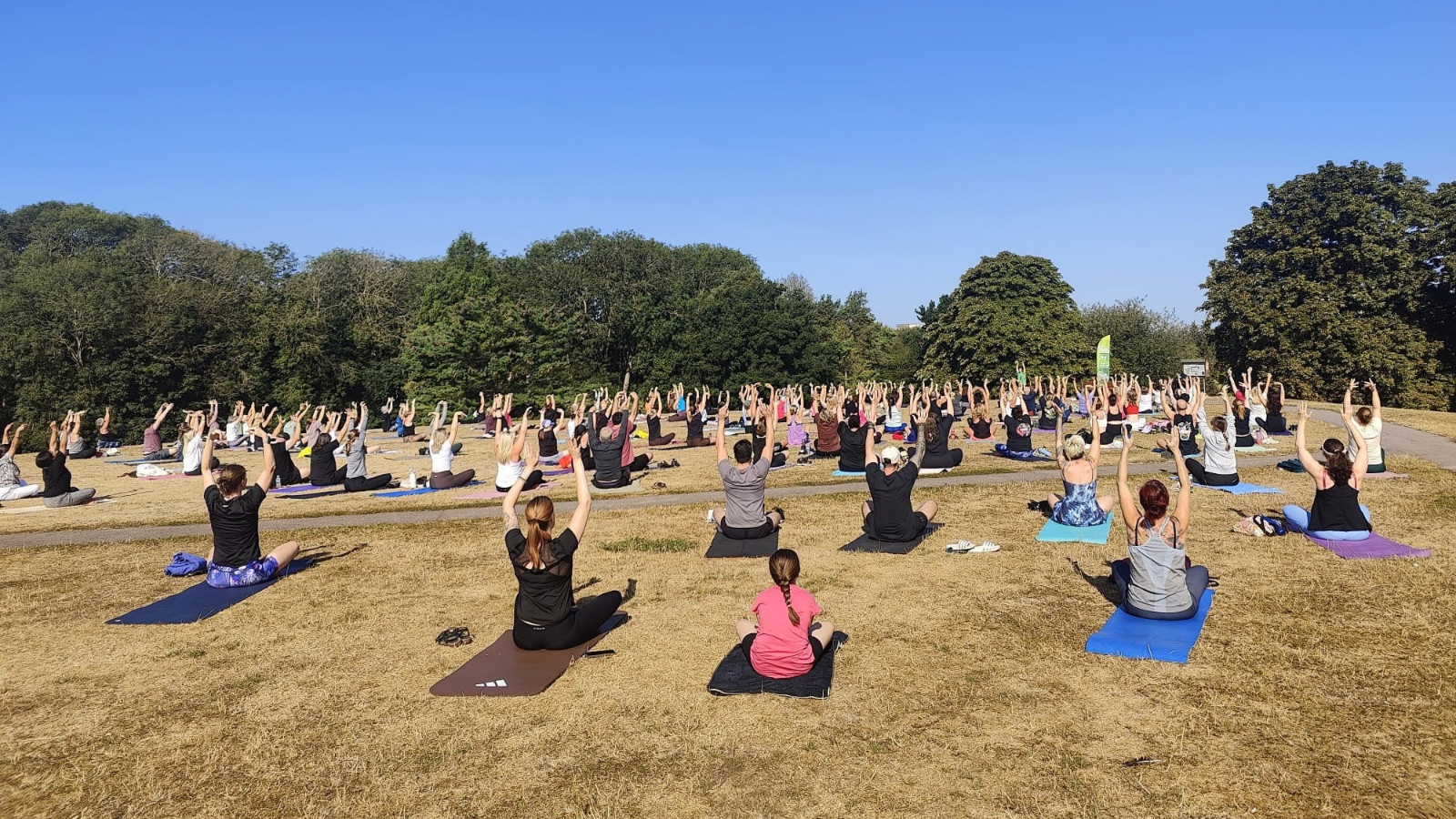
In Harlow, over 2,000 people in total attended weekly Park Yoga sessions throughout the summer, 200 of which had never tried yoga before, while place-based initiatives such as Backside to Trackside and the ongoing work to reclaim and reimagine parks and green spaces in Basildon have encouraged more people to use local environments in ways that support both physical activity and community wellbeing. Following the success of the original Basildon programme, Backside to Trackside has now been expanded across three additional locations, including Brentwood, Thurrock and Canvey Island, highlighting the potential for effective place-based interventions to be scaled and replicated across Greater Essex.
Supporting this approach has been the launch of Find Your Active Here signage in Harlow and Thurrock. Installed within local parks and green spaces, the signs encourage residents to make greater use of the assets and opportunities available on their doorstep by providing easy access to information about nearby activities, facilities, and walking and cycling routes. By helping people discover ways to be active close to where they live, the initiative is strengthening connections between residents and their local environment while encouraging everyday movement. Since the signs were installed at the beginning of August, more than 440 QR code scans have been recorded, demonstrating a strong appetite among residents to find out more about the physical activity opportunities available within their local communities.
Running has also played an important role in activating places this summer. Community events such as the first-ever RunFest and the continued growth of free, accessible opportunities such as new parkruns on Canvey Island and in Saffron Walden (launching this weekend) are helping more residents to engage with physical activity within welcoming community settings. These initiatives not only encourage movement but strengthen community pride and create lasting opportunities for residents to stay active.
Together, these projects highlight how communities thrive when local spaces are intentionally activated, creating positive experiences that encourage people to return, connect and build healthier lifestyles.
Active Travel
Our implementation plan outlines a commitment to making walking, wheeling and cycling more accessible for everyone, recognising the significant role active travel plays in increasing physical activity levels and reducing inequalities.
A major contributor to this ambition continues to be community cycling initiative; Essex Pedal Power, which has engaged communities across Basildon, Canvey Island, Colchester, Harlow and Tendring. Throughout the summer, community rides, local events and the Big Ride Out celebration have demonstrated the growing appetite for cycling and the value of removing barriers to participation. The programme remains focused on enabling more residents to access cycling as a means of travel, recreation and everyday movement. Organisations looking to support cycling in their communities can also apply for Essex Cycle Grant funding, which is continuing to help local projects create more opportunities for residents to get on a bike and build confidence through cycling.
The summer also saw the delivery of Beat the Street in Basildon and Thurrock (Tilbury and Chadwell St Mary), adding to the success of the programme in Colchester earlier in the year, with more than 29,400 residents taking part. Through a fun and engaging approach to behaviour change, residents have been encouraged to walk, cycle and explore their local communities, reinforcing the implementation plan’s ambition to use gamification as a catalyst for long-term active travel habits. Building on this momentum, Beat the Street will return to Eastern Thurrock (East Tilbury, Stanford-le-Hope, Horndon-on-the-Hill and Corringham) at the end of September, creating further opportunities for residents to incorporate movement into their everyday lives.
Further supporting this approach, Street Tag launched across the Maldon District on 1st July, encouraging residents to turn everyday journeys into opportunities to be active. By rewarding walking, wheeling, cycling and exploring local parks and green spaces, the programme helps make movement fun and accessible while strengthening connections to local places and community assets.
Collectively, these programmes are helping to build environments where walking, wheeling and cycling are seen not as just forms of transport, but as accessible and enjoyable ways for residents to incorporate movement into everyday life.
Planning and Infrastructure
Creating lasting change requires more than programmes and events alone. Our implementation plan recognises the importance of investing in places and infrastructure that enable physical activity for years to come.
Earlier this year, funding through the Places and Spaces programme was awarded to 12 projects across Greater Essex, supporting improvements that will help communities be active in ways that suit their needs.
Projects include the restoration of Great Wakering Tennis Courts, repairs to paths within Northlands Park, sensory fitness opportunities through the Dig It Community Allotment project, a wheelchair-accessible in-ground trampoline for children with disabilities, and a safe and welcoming Dancing with Dementia programme. These investments demonstrate how infrastructure can remove barriers, improve accessibility and create opportunities for residents of all ages and abilities to participate in physical activity. The next round of Places and Spaces funding is due to launch on the 12th October 2026.
Alongside these physical improvements, progress has also been made in understanding how the Essex Design Guide and Sport England’s Active Design Principles are influencing planning policy and practice across Greater Essex. In June, partners from across the system, led by the Health Determinants Research Collaboration (HDRC), undertook a planning audit of more than 32 sites and gathered over 255 auditor responses. The audit examined both the presence and implementation of Active Design Principles, providing valuable insight into how effectively they are being embedded within the planning process and highlighting opportunities to strengthen their application. Further analysis and research will continue over the coming months, helping to inform future approaches to creating healthier, more active places.
This work has been complemented by the co-production of the Greater Essex Planning and Health Protocol, a significant collaborative achievement involving partners from planning and public health. The protocol promotes closer working between these sectors to ensure health and wellbeing are considered throughout the planning process, supporting the creation of communities that make it easier for people to be active . It also strengthens existing national and local policy frameworks, including the National Planning Policy Framework (NPPF), which requires local planning authorities to promote health, wellbeing and the reduction of health inequalities. Together, these initiatives are helping to ensure future developments are designed to support physical activity, active travel, social connection and healthier communities from the outset.
By improving existing facilities, influencing future development and reimagining community spaces, these projects and partnerships contribute to the long-term goal of ensuring local environments are attractive, inclusive and fit for purpose.
Looking ahead
The breadth of activity delivered this summer demonstrates the collective power of place-based working. Whether through activating blue spaces on Canvey, bringing thousands together through the Thurrock Big Lunches, supporting active travel through Essex Pedal Power and Beat the Street, or investing in community infrastructure through Places and Spaces funding, every initiative has contributed towards creating more connected and accessible places across Greater Essex.
While each programme has its own story, together they show what is possible when partners, communities and local organisations work collaboratively around a shared vision: creating the conditions for residents to move more, feel connected and enjoy active, healthy lives. This summer’s successes provide strong foundations as we continue delivering against our implementation plan and building places and spaces that support physical activity for everyone.