

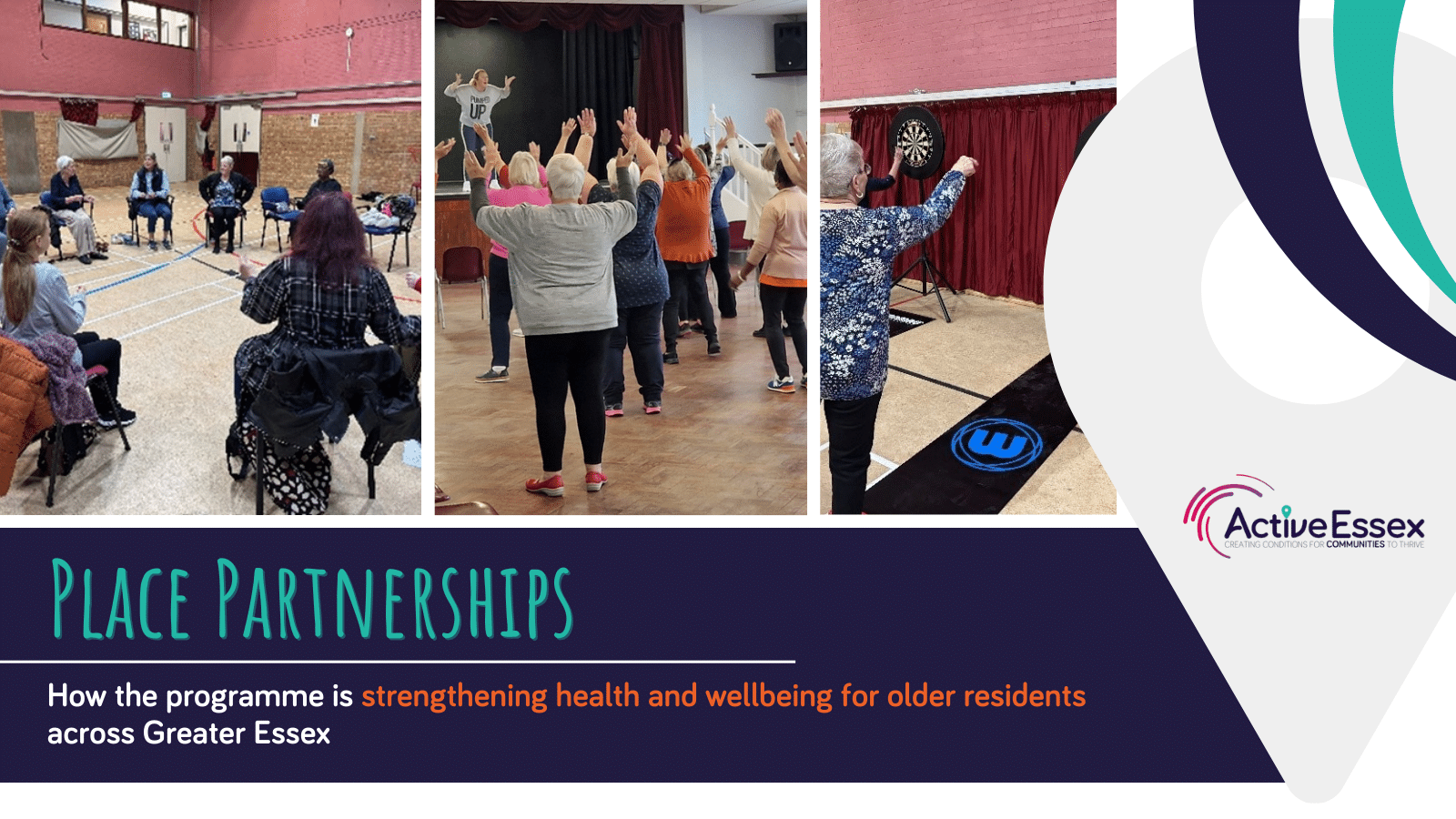
Place Partnerships continue to demonstrate how physical activity can act as a powerful preventative approach across Greater Essex, helping older residents stay healthy, connected and independent for longer.
While physical activity is often associated with structured classes or gym sessions, learning from the Local Delivery Pilot and Place Partnership work shows that its greatest preventative impact comes from something far simpler: creating opportunities for older people to feel connected, confident and part of their community. For many, social isolation is one of the biggest risks to long‑term health, and movement becomes truly meaningful when it reduces loneliness, builds friendships, restores confidence and nurtures a genuine sense of belonging.
This preventative, community‑driven focus sits at the heart of the Place Partnership model. Guided by Sport England’s priorities to reduce inactivity, tackle inequalities and create positive, inclusive experiences, our work centres on opportunities that help older adults stay active because they feel welcomed, supported and socially connected.
Research consistently shows that older residents are far more likely to stay active when the support around them strengthens their social, mental and physical wellbeing:
- Physical activity helps reduce loneliness, providing safe, welcoming spaces where older adults can build relationships and socialise.
- Regular movement boosts mental wellbeing, improving mood, confidence and emotional resilience.
- Staying active maintains physical strength, balance and independence, lowering the risk of falls and long‑term health decline.
- Embedding activity into everyday life enables older adults to stay well for longer, easing future pressure on health and social care.
Putting prevention into action
The Place Partnership programme is now putting prevention into action across Essex, with each area using local strengths to help older residents stay active, connected and well. Instead of a one‑size‑fits‑all approach, every place is shaping its own mix of community‑led activities, whether that’s gentle movement sessions, social groups, confidence‑building classes or wellbeing‑focused programmes, based on what local people need and what already exists in their neighbourhoods.
These projects bring the preventative approach to life by creating welcoming, low‑pressure opportunities for older adults to move more, meet others and feel part of their community, helping to improve social, mental and physical wellbeing in ways that genuinely fit the place and the people.
Castle Point: Building strength through connection
Castle Point supports older residents’ wellbeing through gentle, community‑based activity that helps people stay socially connected, mentally uplifted and physically confident. The Let’s Keep Moving programme offers low‑impact sessions for adults aged 50+, helping build strength, balance and routine, while offering a warm and sociable environment that reduces loneliness and encourages regular participation.
Participants consistently report how these sessions boost their confidence and sense of belonging, showing how welcoming, community‑led activity can help maintain independence and prevent the decline associated with isolation.
Harlow: Confident movement for independent living
Harlow helps older residents feel better and stay moving through simple, supportive sessions that boost balance, mobility and social connection, The Judo Sessions for Seniors (Land on Your Feet) programme supports adults to build physical resilience and reduce fall risk through accessible, structured movement. Participants, including those living with long‑term conditions like Parkinson’s, report improved confidence, better mobility and a renewed sense of wellbeing. These sessions show how tailored activity can support independence, reduce isolation and positively impact quality of life.
Colchester: Bringing residents together through fun activities
Colchester offers a wide range of community‑led activities that strengthen older residents’ social, mental and physical wellbeing. Programmes such as Swimming for Wellbeing, Chair Dance, Health Walks and Darts & Social Fun give residents multiple ways to stay active, meet new people and maintain their independence. Whether it’s improving mobility in the pool, connecting with others on a guided walk, or enjoying music and movement in a chair‑based dance session, these initiatives help reduce loneliness while building routine, confidence and a strong sense of community.
Thurrock: Stronger bodies, stronger communities
Thurrock champions healthy ageing through sustainable, community‑shaped programmes that help older adults maintain strength, balance and confidence while staying socially connected. The Stay Active, Stay Well programme provides affordable classes such as chair‑based exercise and Pilates, helping residents build routine and reduce isolation. Alongside this, the Stronger for Longer 36‑week strength and balance course supports adults aged 65+ to improve mobility and reduce the risk of falls, all within a friendly, social setting that encourages ongoing engagement. These initiatives help people stay independent for longer and build supportive local networks.
The PEM & Reconnect Journey: Reconnecting People, Rebuilding Confidence
The Prevention and Enablement Model (PEM) began as a Local Delivery Pilot test‑and‑learn with Adult Social Care, designed to help older residents stay active, independent and connected through simple, community‑led movement. The evaluation showed remarkable results, with £58 saved for every £1 invested and an estimated £20 million in annual social value when scaled across reduced service use and higher life satisfaction. These outcomes demonstrated how supporting older adults to move more can prevent decline, reduce loneliness and improve confidence.
Based on the strong results, Essex County Council built PEM into its core offer, now called Reconnect, and invested £2.1 million to help it reach even more older residents. The approach has also sparked wider changes, with care homes now building staff confidence in supporting physical activity and even being recognised through NHS East of England Winter Deconditioning Games.
This preventative mindset has encouraged the whole system to work together on shared challenges, including fall prevention, which led to the Able Like Mabel strength and balance campaign. With Active Essex helping guide the journey, the shift from PEM to Reconnect reflects genuine partnership and a shared commitment to keeping people well for longer. The model now even features within Essex’s CQC evidence, showing how simple, community‑focused support can help older adults stay active, connected and feeling their best.
Aligning with Active Essex’s Implementation Plan
This work directly aligns with the Active Essex implementation plan, which focuses on strengthening community cohesion, building local capability and capacity, and influencing system change to help achieve the preventative outcome: ensuring physical activity is used to improve social, mental and physical wellbeing across the county.
Through Place Partnerships, we are putting these priorities into action by strengthening social prescribing pathways and ensuring residents are connected to the right local opportunities at the right time. The Find Your Active Place Navigators are central to this approach, boosting community capability by helping residents overcome barriers, build confidence and access community‑based activity that supports their wellbeing.
Together, these workstreams demonstrate how Place Partnerships and Active Essex are jointly driving system change, embedding movement into everyday life, reducing social isolation and creating stronger, more resilient communities. In return, this approach showcases the power of physical activity to strengthen communities and support residents to live longer, healthier, more connected lives.
Shaping what comes next
As Place Partnerships look ahead, the focus remains on building on what works and keeping prevention at the centre of future delivery. The success of community‑led activities has shown that small, local opportunities to move, connect and build confidence can make a meaningful difference to older residents’ wellbeing.
The next phase will involve strengthening partnerships across Public Health, Adult Social Care, the NHS and community organisations to broaden reach, support more isolated residents and embed movement into even more everyday settings, including care homes and neighbourhood hubs.
By continuing to learn from residents and shaping offers around what matters most to them, Place Partnerships are positioned to drive lasting preventative impact, helping older adults across Essex stay active, connected and well for longer.