

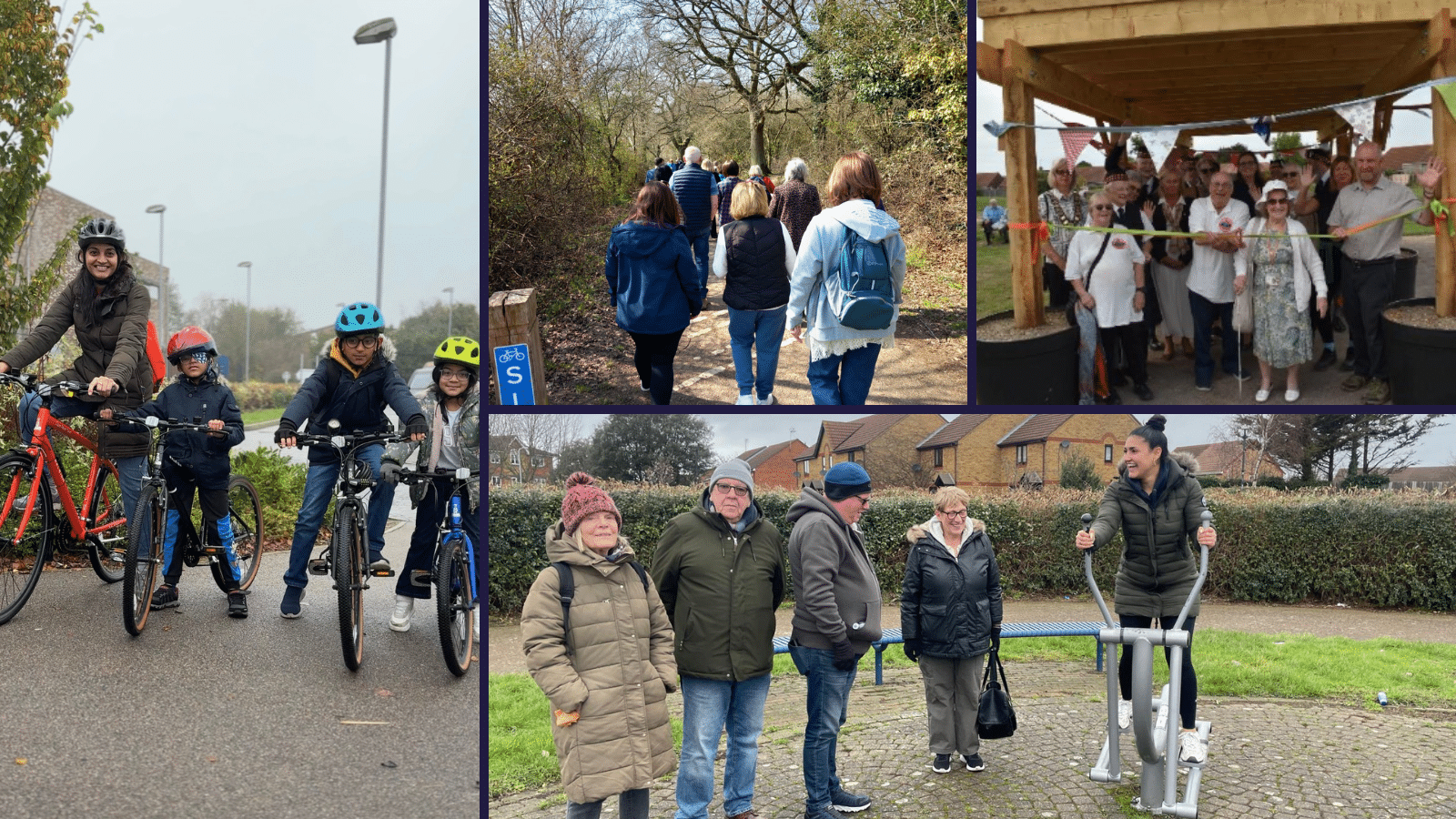
We often think of physical activity as something that happens in sports halls, gyms or leisure centres, but learnings from the Local Delivery Pilot and more recently the Place Partnership work across Essex, are showing us something far more powerful. Real, lasting change is happening in the places people feel connected to. The streets people walk, the parks they gather in, the schools their children attend, the community hubs they trust, and the green spaces within their neighbourhoods.
Through our Place Partnership work in Essex, we’re looking at ways to activate these everyday spaces, in collaboration with local partners who are deeply embedded within their communities. These are the people and organisations who understand the character of a place, the barriers residents face, and the opportunities that matter most. Together, we’re helping to reshape local environments so they support healthier, more active lives for everyone.
This approach sits at the heart of the Place Partnership initiative. Guided by Sport England’s priorities – increasing physical activity, reducing inactivity, creating positive experiences for children and young people, and tackling inequalities – our work is directly contributing to these outcomes. By transforming the environments people use every day, we’re making movement easier, more accessible and more appealing, especially for those who face the greatest barriers.
Research shows that people are far more likely to be active when:
- their neighbourhoods feel safe, welcoming and connected
- green spaces are inviting and well‑used
- people feel safe, valued and have a sense of belonging
- walking, wheeling and cycling are convenient and enjoyable
- community assets feel like they belong to the people who live there
- activity is embedded into daily routines
Our shared ambition across Essex
Across all six of our Place Partnership areas, these principles translate into a shared set of outcomes. We want local assets, such as parks and libraries to community centres and cycling facilities, to become welcoming hubs for physical activity. We want systems to work together so that sustainable travel is safe and viable. We want physical activity offers that are aligned to local need and inclusive by design. And ultimately, we want to build more active communities with a stronger sense of safety, connection and belonging.
These ambitions directly support Active Essex’s wider outcome of creating better connected and accessible places, designed to increase active travel and physical activity. Our contribution to this outcome focuses on four key areas: active travel, planning and infrastructure, activating community spaces, and environmental sustainability. When places are easier to navigate and more welcoming to move through, we believe communities will be more likely to travel actively and lead physically active, healthier lives.
Turning principles into practice
The Place Partnership programme is now bringing these principles to life across the county. From active travel and green space activation to inclusive cycling, school‑based initiatives and reimagined public leisure, each area is shaping its own approach based on local needs, assets and ambitions.
Basildon: Embedding active environments into the fabric of the place
Basildon is showing what’s possible when active environments become a shared priority across planning, transport, health and community partners. Active design is being embedded into the refreshed Local Plan and LCWIP, while partners explore new community spaces, such as faith venues, business sites and schools, to widen access to activity close to home.
The borough is also linking climate and health agendas, with active travel supporting its carbon‑neutral ambitions. Green spaces in Vange and Northlands Park are being activated with a focus on women, girls and people with mobility impairments, and Essex Pedal Power continues to grow, including the Basildon Hospital model supporting low-income staff. Active travel is also helping young people not in education, employment or training, to build confidence and access new opportunities.
Alongside this, the Creating Active Schools programme is embedding movement into the school day. Twenty‑six schools have completed the new activity survey and received tailored action plans, with the first Basildon Active Schools Conference bringing together 25 schools. A new Youth Board launching in 2026 will ensure pupil voice continues to shape the borough’s approach.
Together, these developments show how strategic system change and hyper‑local activation can work hand in hand to create healthier, more resilient communities.
Castle Point: Activating community assets
In Castle Point, Canvey Island is showing how community‑led spaces can become powerful catalysts for health and connection. The newly opened Gunny Community Garden and Hub now offer workshops, therapeutic gardening, accessible play areas, outdoor gym facilities and biodiverse green spaces. A recent visit highlighted the outdoor gym as an untapped asset, sparking plans for a community‑led bootcamp, developed with the Castle Point Wellbeing Team and local instructor Julie. Alongside this, Essex Pedal Power is supporting children and families across Canvey, with bikes and scooters provided to pupils transitioning from primary to secondary school, new family bike packages, and early‑years cycling support. This project is encouraging children to travel actively to school and confidently from an early age.
Colchester & Tendring: Building active wellbeing places
Colchester and Tendring are reimagining how places support movement, health and connection. Both areas are influencing their Local Plans to embed active environments and active travel, supported by Active Environments Officers who are driving change within planning systems. Major developments such as the Tendring–Colchester Borders Garden Community are being designed around healthy, sustainable living from the outset.
Public leisure is evolving into a network of Active Wellbeing Hubs that integrate physical activity with health and social care. In Clacton, a new £1.4m inclusive cycling facility is taking shape, while the Greenstead Community Hub (part of a £40m regeneration programme) is embedding active design and community ownership into a major redevelopment. Youth spaces are also being revitalised, with new basketball and climbing facilities shaped by young people themselves.
Essex Pedal Power continues to expand across both localities, supporting families, jobseekers and residents in regeneration areas, while Wheels for All is transitioning toward a sustainable, community‑led model. Together, these developments are creating places where physical activity is woven into everyday life, not confined to traditional leisure settings.
Harlow: A town designed for active travel
Harlow is working towards a bold ambition: increasing active and sustainable travel from 23% to 50%. With more than 30 miles of cycle network already in place, the town is embedding active design into the Garden Town initiative to ensure new developments prioritise walking, wheeling and cycling. Its extensive green wedges are being activated as free, accessible spaces for residents to move more and connect with nature.
The expansion of Essex Pedal Power is helping to remove financial barriers to cycling, while strengthened collaboration across planning, community engagement and wellbeing partners is supporting a more joined‑up approach to creating healthy, active neighbourhoods. Harlow is showing how thoughtful design and activation can reduce health inequalities and build a more connected, resilient town.
Thurrock: Building a whole‑system approach to active travel
Thurrock is developing a place‑wide commitment to active travel, supported by strong political leadership and a shared ambition across partners. Investment in high‑quality walking and cycling infrastructure is helping to make active travel safer and more appealing, while inclusive cycling opportunities are expanding to ensure residents of all ages and abilities can participate.
Library Hubs are evolving into movement‑friendly community anchors, offering walking groups and low‑cost activities that bring people together in trusted local settings. This whole‑system approach is helping Thurrock create healthier neighbourhoods and more active communities, where active travel becomes the easy, natural choice.
Looking ahead
As we move into the next phase of Place Partnerships, our focus remains clear – deepen what works, strengthen partnerships, empower communities, and continue activating the places and spaces that shape daily life. When we design environments that support movement, and activate them with the people who know their communities best, we don’t just increase physical activity. We build healthier, more connected, more resilient places for everyone.
Find out more about Place Partnerships here: https://www.activeessex.org/place-partnerships/