
November is a time to shine a spotlight on men’s health. Throughout Men’s Health Awareness Month (also known as Movember), there is growing recognition of the importance of looking after not only our physical health, but our mental wellbeing too.
The need for action remains clear. Latest figures show that around three-quarters of all suicides are deaths of men, with men around three times more likely to die by suicide than women. Middle-aged men continue to experience the highest suicide rates, underlining the importance of creating opportunities for connection, conversation and support before people reach crisis point.
Through our Find Your Active Move for Your Mind campaign and the new Beyond the Essex Game initiative, developed in partnership with Essex County Council Public Health, Active Essex is helping to encourage positive conversations around mental wellbeing and connect men to support.
For many men, social connection is equally important and sought after, and physical activity can prove a great catalyst for this.
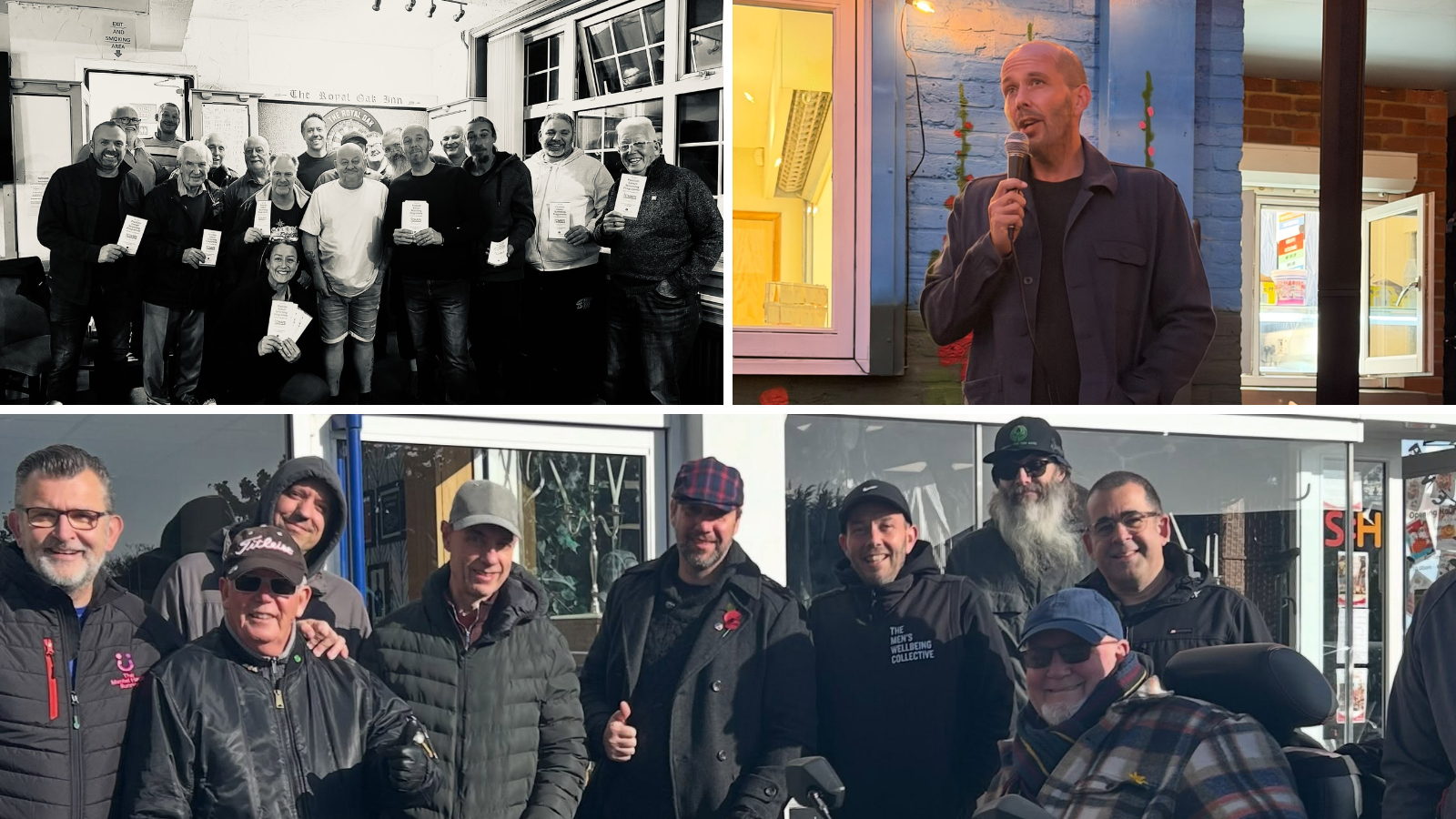
To explore this further, we spoke with Scott Tatum, Founder and Director of The Men’s Wellbeing Collective CIC, and Shawn Leek, Founder of The Mental Health Runner CIC. Together, they are helping men across North Essex improve their wellbeing through walking, movement and supportive communities.
Both Scott and Shawn’s passion for supporting men’s mental health comes from their own personal experiences with challenges to their mental wellbeing.
Shawn, a fully qualified PGA Golf Professional and keen runner who has completed 27 marathons, now leads The Mental Health Runner CIC, delivering walks, runs and community activities across Essex. His motivation stems from overcoming some of life’s most difficult moments.
“Supporting others comes from my own lived experiences and struggling with my mental health. I attempted to take my own life three times in 2016 because I genuinely believed the world would be better without me in it. Now I spend my time helping others know that people do care and want to help.”
Similarly, Scott’s own wellbeing journey inspired him to create opportunities for men to support one another.
“I was fortunate to receive support and guidance when I needed it. That has given me a huge passion to raise awareness of support and create communities where men can support each other.”
Both believe that movement is one of the foundations of good wellbeing. For Scott, wellbeing starts with the basics.
“Ensuring I’ve had enough sleep, am eating well and hydrating well are the starting points I work on every day. Activity such as dog walking, running, gym work, mobility work and football are then embedded in my daily routine.”
Shawn shares a similar approach and lives by a simple mantra:
“Good wellbeing is about work-life balance, but mainly getting the basics right. Good sleep, good food and good movement give you a great start. It’s not selfish, it’s essential.”
For Shawn, running became more than exercise. It became a vital part of maintaining his mental wellbeing.
“Running and walking are part of my daily routine, but more importantly they give me time to refocus and recharge. When I stopped running in 2016, that’s when my life fell apart. Running had been the glue holding me together. I lost that for a while, but walking helped me find my way back.”
Today, Shawn believes the benefits of movement extend far beyond fitness.
“It helps with social connections, structure, goals, energy and focus. Most of all, it gives you time for yourself.”
Scott founded The Men’s Wellbeing Collective after recognising the importance of creating safe, welcoming spaces where men could come together and support one another. Having worked in men’s health and wellbeing for many years, he saw that while excellent services existed, they were not always connected.
“I work hard to ensure men are aware of the other sessions they can attend to enhance their wellbeing, so they have choice, more opportunity and can reduce social isolation.”
One of the biggest challenges he sees is the stigma that still surrounds men discussing their mental health.
“Many men my age have had it embedded in them that opening up is a weakness. We work hard to break down that barrier and build trust, which can then lead to confidence and men opening up more.”
Through activities including walking, fishing, bowling, darts and pool, Scott and his team create opportunities for men to connect naturally and develop friendships.
“To see men increasing their confidence, staying active, making new friends and becoming aware of support services really is a joy to witness.”
This November, Scott and Shawn are working together to organise men’s walks across North Essex. While the walks may appear simple on the surface, both agree they provide something much deeper.
“The walks create an environment where men can talk freely in a non-judgemental space. We always say it isn’t just a walk. The men’s walks are a great starting point because of the simplicity of going for a stroll. Being outside in nature, without the pressure of eye contact, allows men to have open conversations and talk more freely about their lives and experiences.”
The pair have seen first-hand how these environments can reduce isolation, build confidence and create lasting friendships. Shawn’s own walking groups demonstrate exactly that. What begins as a gentle stroll can often become something much bigger.
“The walk is far more than just that. We only go as fast as the slowest person. It’s a group effort which helps us achieve our goals together and I’ve had walkers go from a gentle stroll to running their first parkrun.”
One message both Scott and Shawn are passionate about is that there is no single activity that works for everyone. Instead, finding the right environment can be just as important as finding the right activity.
“It’s important to find the right activity, but it’s even more important to find the right group. When that happens, you’re not only getting fit, you’re making friends too.”
That idea sits at the heart of both organisations. Physical activity can improve wellbeing, but the sense of belonging and connection that comes with it can be equally powerful. Those themes of movement, connection and community are central to Active Essex’s wellbeing work too.
Mental health challenges can affect anyone, whether they’re involved in organised sport, physical activity or simply navigating everyday life. That’s why Active Essex and Essex County Council Public Health have launched Beyond the Essex Game, an initiative focused on supporting the wellbeing of men. In partnership with some of the county’s leading sports club foundations and local charities, the campaign is helping men access support when they need it most.
Through our Find Your Active Move for Your Mind campaign, we are also encouraging people to discover activities they enjoy and the positive impact movement can have on mental wellbeing.
Many men can feel pressure to simply ‘get on with it’ when they’re struggling. But both Scott and Shawn believe community support and early conversations are key to changing that, highlighting the importance of helping men build confidence before they reach crisis point.
“Making people aware of the support available can help them ask a friend or loved one a simple question: ‘Are you OK?’ Those three words were asked to me ten years ago and helped me get the support I needed.”
For anyone thinking about joining a group, becoming more active or reaching out for support, Shawn has a simple message:
“Making the first step is often the hardest. If you’re thinking about going to a group or starting an activity, please give it a try because from my experience it truly can change your life for the better.”
You don’t need to be an athlete, and you don’t need to be particularly sporty. As Scott and Shawn’s experiences show, sometimes all it takes is finding the right group, taking that first step and discovering a community where you feel supported, connected and able to be yourself.
To learn more about the organisations featured in this blog, visit:
- The Men’s Wellbeing Collective: https://www.menswellbeingcollective.org/
- The Mental Health Runner: https://www.thementalhealthrunner.co.uk/
You can also explore:
- Find Your Active Move for Your Mind: https://www.activeessex.org/find-your-active/
- Beyond the Essex Game: https://www.activeessex.org/beyond-the-essex-game/