
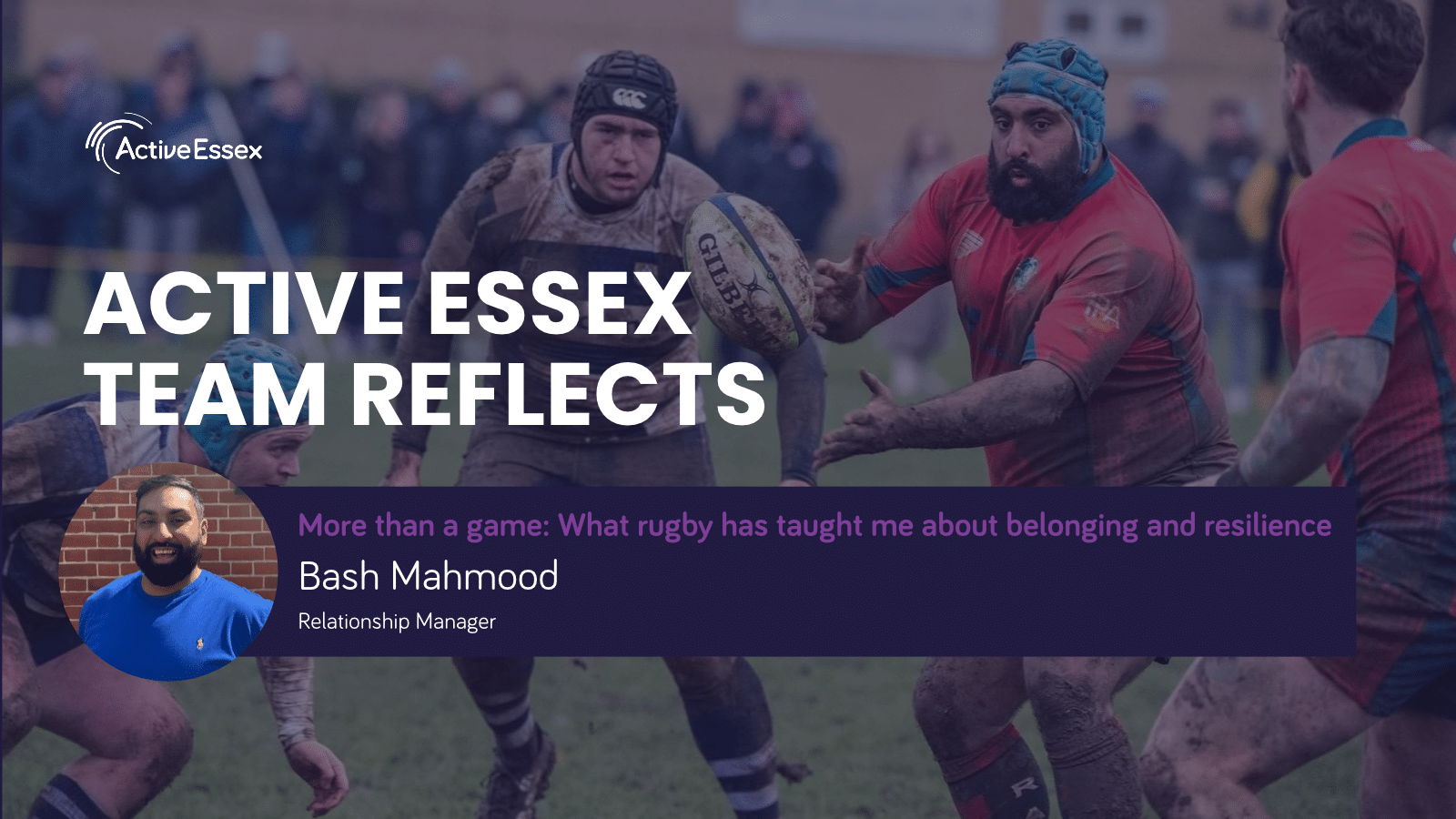
When people think about rugby, they often think about the physical side of the game. The tackles, scrums and collisions that take place over 80 minutes on a Saturday afternoon.
But for me, rugby has always been about much more than that.
As we mark International Men’s Day and this year’s theme, ‘The Future is Everyone’, I’ve been reflecting on the role rugby has played in my life and the lessons it’s taught me about belonging, resilience and the importance of having people around you.
My rugby journey began as a teenager after a bit of family competitiveness sparked an interest in trying the game. I joined my first club through one of my closest friends, Jack, at a time when I was finding school difficult.
Rugby gave me something I hadn’t necessarily found elsewhere: a place where I felt I belonged. It built my confidence, introduced me to new friendships and gave me a sense of purpose. Looking back, what mattered most wasn’t how well I played. It was feeling part of something.
Coming from a South Asian background, rugby wasn’t a sport that felt particularly familiar and could easily have been something I saw as ‘not for me’. Fortunately, that wasn’t my experience. From day one, I felt welcomed by teammates, coaches and the wider club community. They saw me for what I could contribute, not where I came from.
Over the years, rugby has given me experiences I could never have imagined. I’ve played club, university, national and international rugby before eventually returning home to Harlow, where I still play first-team rugby. But the achievements are not what stand out most.
What I remember are the friendships, the away trips, the training sessions and the people who invested their time in helping me develop.
One person who had a particularly big impact was my coach, Tony Hills, who sadly passed away last month. Tony coached me from Under 15s through to Colts and helped shape not only my rugby journey, but also my confidence and outlook on life.
Like many volunteers across Essex, he gave his time because he cared about helping young people grow and succeed. His influence reminds me why positive role models matter. They help young people build confidence, develop resilience and feel they belong. International Men’s Day is an opportunity to recognise the men who make that difference, often without seeking recognition themselves.
Rugby has also taught me a lot about resilience.
A few years ago, I suffered a serious back injury and was told I shouldn’t expect to play rugby again. Physically it was challenging, but mentally it was even harder. Rugby had been such a big part of my identity, I struggled to imagine life without it.
What I learnt through that experience is that resilience isn’t about going through everything alone.
Like many men, I’ve sometimes felt the pressure to simply get on with things and push through difficulties. My experience has taught me the opposite. Recovering from injury wasn’t down to determination alone. It was the support of friends, teammates, family members and professionals that helped me through.
That’s why reducing the stigma around men’s mental health remains so important. We need to create environments where men feel comfortable talking openly, checking in on one another and seeking support when they need it. Positive role models have an important role to play in that too, showing that asking for help is not a weakness.
Through my role at Active Essex, I see how sport and physical activity can help create those conversations and connections. While my experience came through rugby, not everyone finds belonging through a sports club.
Projects such as LiFT Your Mood at Yard Fitness support men through informal outdoor exercise sessions, creating welcoming spaces where physical activity and social connection go hand in hand. Similarly, Blue Therapy Active brings people together through shared experiences around water, helping participants build confidence, improve wellbeing and form meaningful relationships.
The same thinking sits behind Beyond the Essex Game, a new initiative helping sports clubs better understand, recognise and respond to men’s health challenges. Sports clubs are often trusted spaces where friendships are formed and difficult conversations can happen, making them well place to support wellbeing both on and off the field.
The theme ‘The Future is Everyone’ feels particularly relevant because everyone deserves the opportunity to feel connected, supported and valued.
For me, that’s one of the biggest lessons rugby has taught me.
The game itself has given me countless memories, but its greatest impact hasn’t been the matches I’ve played or the achievements I’ve celebrated. It’s been the friendships, support networks and sense of belonging that have stayed with me through every stage of life.
And if there’s one message I’d share this International Men’s Day, it’s that nobody should feel they have to face life’s challenges alone.
Whether that’s through a sports club, a community group, family, friends or professional support, reaching out isn’t a sign of weakness. It’s often the first step towards strength.
And that’s what makes rugby, and so many other community activities, about far more than the game itself.